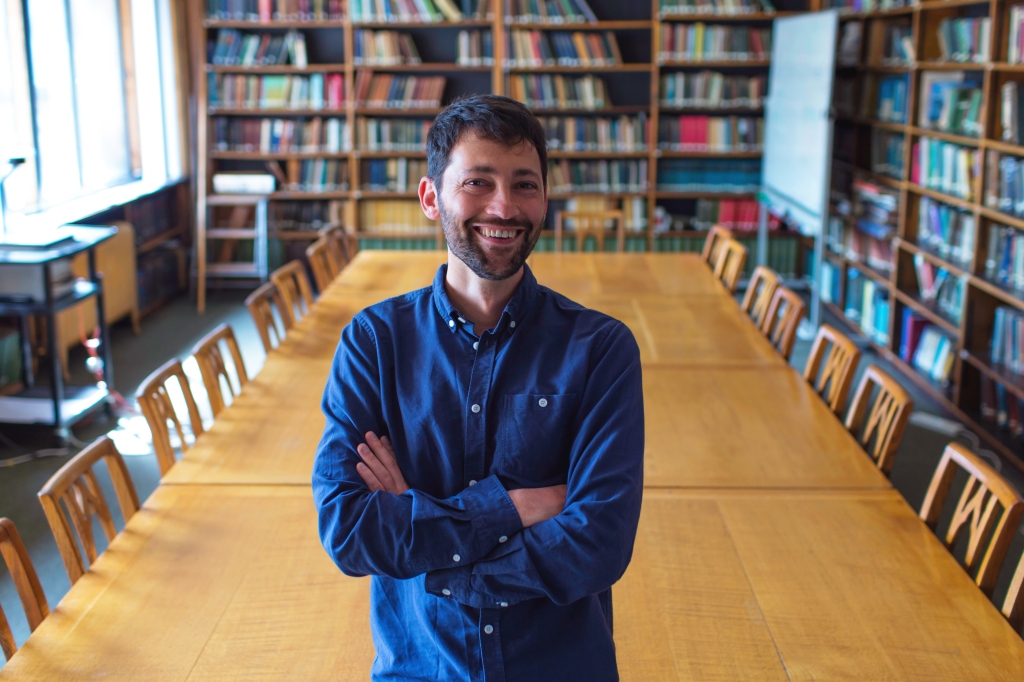
Daniel streicker
Professor of Viral Ecology
Wellcome Trust Senior Research Fellow
daniel.streicker[at]glasgow.ac.uk
Employment history
- 2013-pres. University of Glasgow (PI)
- 2012-2013 University of Georgia (Postdoc)
- 2006-2011 University of Georgia (PhD Student)
- 2004-2006 Centers for Disease Control and Prevention (Emerging Infectious Diseases Training Fellow)
Postdocs and Research Fellows

Nardus joined the lab as a postdoc in 2018 and specializes in large scale, quantitative analyses of infectious disease data, with a focus on emerging viruses. He is building forecasting models for rabies using epidemiological and viral genomic data.


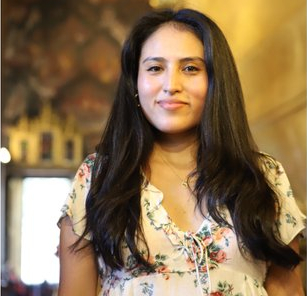
Dr Jocelyn Pérez Lazo
Jocelyn is a Peruvian vet and virologist who joined the lab in 2021. Her role involves establishing a captive bat colony in Peru and conducting experiments to understand rabies virus infection in bats and the relationship between of physiological stress and RNA virus shedding. She is also monitoring wild bat colonies to study the frequency and duration of rabies epizootics.


Dr Frédéric Touzalin
Fred is a vet by training and has been affiliated with the lab since 2023, having been awarded a Dorothy Collaborative Research Fellowship at University College Dublin. He is working on the influence of environmental and anthropogenic factors on the demography of bat populations in Brittany (France). He is interested in developing an approach for assessing the health of wild species, particularly bats, based on integrating longitudinal demographic and environmental data, immunological markers, microbial diversity and transcriptomics.
Portrait by Ed Binkley (https://www.edbinkley.com/), all rights reserved.

Haris Malik
Haris joined us in October 2021 after receiving a Carnegie PhD Scholarship. His PhD explored the molecular epidemiology of a betaherpesvirus candidate vector for a transmissible rabies vaccine. His postdoc will carry out in vitro and in vivo work to further test the suitability of herpesvirus vectors in bats.
PhD Students

Avery Holmes
Avery joined the lab for a master’s placement year in 2021 and has remained part of the team in various ways ever since. Currently, he is working on his PhD as part of the Wellcome Trust Integrative Infection Biology Programme. His research focuses on fundamental patterns and diversity in virus ecology, with his PhD investigating whether wildlife virus diversity is affected by host ecological and life history traits.
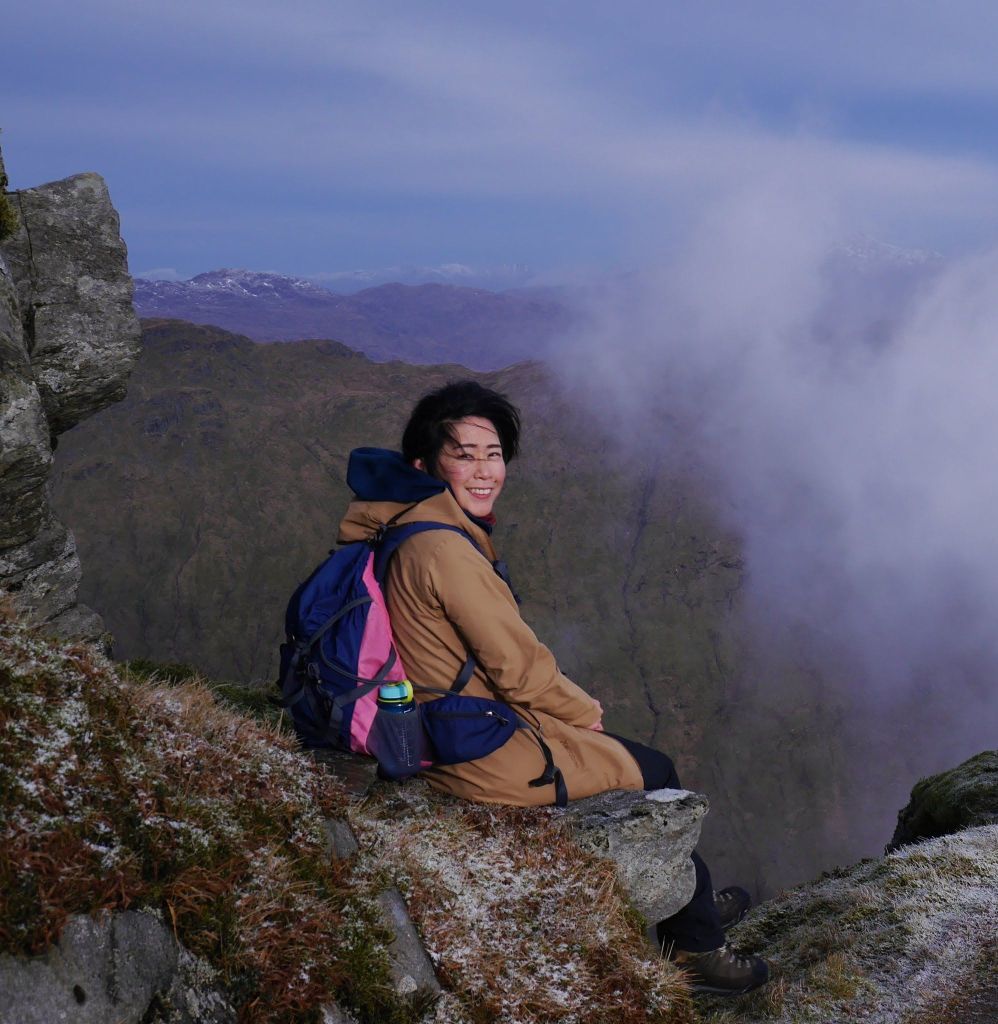
I-Ting Tu
I-Ting joined the group in 2023 through the Wellcome Trust Integrative Infection Biology Programme. She is investigating viral exchange at the marine-terrestrial interface, specifically vampire bats as a potential reservoir, transmitting viruses to their prey species, including South American fur seals, sea lions and domestic pigs.

Bailey Atkinson
Bailey joined the group in 2024 through the CVR PhD Programme. He is investigating viral exchange at the interface between bats and livestock with a particular focus on morbilliviruses. His project will involve a combination of machine learning on viral genomes, field studies and serology.
Lab technicans
Alice Broos
Alice joined the group as a technician in 2014 and is currently the Lab Manager. She effectively runs the wet lab, with expertise in everything we do.
Elizabeth Wignall-Fleming
Elizabeth joined the group as a technician in 2025 to generate high throughput neutralization assays for serological detection of virus exposures.
Dog/Picnic menace

Kodiak
Past lab members
Dr Hollie French (Current: Postdoc, University of Glasgow)
Dr Matt Arnold (Current: Postdoc, Royal Veterinary College)
Dr Rita Ribeiro (Current: Lecturer Scotland’s Rural College (SRC))
Dr Megan Griffiths (Current: Epidemiological Modeller, UK Health And Safety Executive)
Dr Laura Bergner (Current: Research Fellow, University of Glasgow)
Dr Max Farrell (Current: Lecturer, University of Glasgow)
Dr Diana Meza (Current: Postdoc, University of Warwick)
Dr Kevin Bakker (Current: Principal Scientist, Merck, USA)
Dr Julio Benavides (Current Research Director in One Health, MIVEGEC, IRD, Montpellier, France)
Dr Dan Becker (Current: Assistant Professor, University of Oklahoma)
Dr Richard Orton (Current: Bioinformatician, MRC-University of Glasgow Centre for Virus Research)
 Streicker Lab